Locksmith Advice & Guides
Types of Door Locks in the UK: How to Identify Them
- Guides
If a lock needs repairing or replacing, one of the first questions you may be asked is what type of lock is fitted. Looking at the keyhole alone rarely gives the complete answer.
Table of Contents
The most reliable starting point is the door itself. Check what the door is made from, where the lock mechanism sits and what you can see on the inside face and along the door edge. These clues can help distinguish a mortice lock from a nightlatch, rim cylinder or multipoint locking system.
This guide explains the common types of door locks found in UK homes, how to recognise them and what their main components do. It also shows where to find useful markings, while explaining why appearance alone cannot confirm the exact model or security standard.
How to Identify Your Door Lock
You can usually identify the general type of door lock by checking three things: the door material, where the mechanism is fitted and what appears along the door edge.
- Start with the door material. Timber doors commonly use mortice locks, nightlatches or rim locks. uPVC and composite doors often use a cylinder connected to a multipoint mechanism, although the material alone does not confirm the lock type.
- Look at where the lock sits. A case recessed into the door edge is likely to be a mortice lock. A visible box fixed to the inside face may be a nightlatch or surface-mounted rim lock.
- Check the door edge when it is safe to do so. A single latch, bolt or both usually indicates a central lock case. A long metal strip with several hooks, rollers or bolts normally indicates a multipoint locking system.
Record any manufacturer names, product codes or standard markings you can see. Clear photographs of the handles, keyway and complete door edge can also help with identification.
Only examine the door when it is already open and no force is required. These checks can identify the general lock family, but dimensions and product markings may still be needed to confirm the exact model or a compatible replacement.
Common Types of Door Locks in UK Homes
Door locks are usually named either after the complete mechanism or the component that accepts the key. This is why terms such as mortice lock, nightlatch, euro cylinder and multipoint lock are sometimes confused even though they describe different parts or systems.
The table below provides a quick comparison of the main types found on UK doors.
| Lock type | Usually fitted to | How to recognise it | Key distinction |
|---|---|---|---|
| Mortice deadlock | Mainly timber entrance doors | The case is recessed into the door edge and a locking bolt is visible when the door is open | It has a key-operated bolt but no handle-operated latch in the same case |
| Mortice sashlock | Timber entrance and internal doors | The case is recessed into the edge, with both a spring latch and locking bolt visible | It combines a handle-operated latch with a separate locking function |
| Nightlatch with rim cylinder | Mainly timber entrance doors | A box-shaped case is fixed to the inside face and a separate cylinder is visible outside | The latch usually engages when the door closes |
| Euro cylinder with a multipoint lock | Common on uPVC and composite doors | A euro-profile cylinder sits near the handle and a long locking strip runs along the door edge | The cylinder accepts the key while the wider mechanism controls several locking points |
| Euro cylinder with a single-point lock | Some timber, aluminium and metal doors | A euro-profile keyway is visible without a long strip or several locking points | The cylinder operates one central lock case |
| Surface-mounted rim lock | Some older timber doors, internal doors and outbuildings | The complete lock case is visible on the inside face of the door | The mechanism is mounted on the surface rather than recessed into the door edge |
These descriptions identify the general lock family, not the exact model. A modern timber door can have a multipoint system, while aluminium and metal doors may use cylinder-operated lock cases. Product markings and measurements are still needed before choosing replacement parts.
How to Identify Locks on a Timber Door
Timber doors commonly use mortice locks, nightlatches, surface-mounted rim locks or a combination of two separate systems. The easiest way to tell them apart is to check whether the lock case sits inside the door edge or is visible on the inside face.
Mortice Deadlocks and Sashlocks
A mortice lock is fitted into a recess cut within the door edge. When the door is open, you normally see a metal faceplate together with a latch, locking bolt or both.
A mortice deadlock has a locking bolt but no handle-operated latch in the same case. Another latch or nightlatch may therefore be used to hold the door closed when it is not locked.
A mortice sashlock combines a spring latch and locking bolt in one case. The handles operate the latch, while the key or cylinder controls the locking function.
Some mortice locks use internal levers, while others work with a cylinder. The shape of the case or number of levers does not by itself confirm a security standard, so check the complete product markings before drawing that conclusion.
Nightlatches and Rim Cylinders
A nightlatch is usually fixed to the inside face of a timber entrance door. Its spring latch engages with a keep on the frame when the door closes, allowing the door to latch without the locking case being recessed into the edge.
The main visible parts are:
- Nightlatch case: The box-shaped mechanism on the inside face
- Spring latch: The part that enters the frame keep
- Rim cylinder: The outside component into which the key is inserted
- Inside control: A knob, handle or other control used to release the latch
The rim cylinder and nightlatch case are separate components. Replacing the cylinder does not automatically replace the inside mechanism, and not every rim cylinder is compatible with every nightlatch.
Some nightlatches also have deadlocking or internal-locking features. Check the model and operating instructions rather than assuming every nightlatch works in the same way.
Surface-Mounted Rim Locks
A traditional rim lock is also fitted to the inside face of a timber door, but it is not necessarily the same as a nightlatch. Its case may contain a latch, bolt or both, depending on the design.
Unlike a typical nightlatch, a rim lock may not latch automatically when the door closes. It may use a key, handle or knob to operate the mechanism.
Timber entrance doors sometimes have both a nightlatch and a separate mortice lock. In that arrangement, the two locks operate independently and should be identified separately.
What Parts Make Up a Multipoint Door Lock?
A multipoint lock is a complete locking system with several connected parts. It is commonly fitted to uPVC and composite doors, although some timber and aluminium doors also use this type of mechanism.
When the handle or key is operated, locking points positioned along the door edge move into keeps fitted to the frame. Identifying the individual parts helps explain why changing the cylinder does not always fix a multipoint-lock problem.
Main Parts of a Multipoint Lock
| Part | What it does |
|---|---|
| Cylinder | Accepts the key and operates the central locking mechanism. Euro cylinders are the most common type on residential multipoint doors. |
| Handles and spindle | The spindle connects the handles through the door and transfers their movement to the gearbox. |
| Gearbox | The central part of the mechanism that responds to the handle and cylinder. It controls the connected locking points. |
| Faceplate and locking strip | The long metal strip visible along the edge of the door. It connects the gearbox to the other locking points. |
| Hooks, rollers, bolts or pins | These extend from the door edge and engage with corresponding keeps in the frame. A mechanism may use one or several types. |
| Keeps | Metal fittings attached to the frame that receive the latch, hooks, rollers and bolts when the door is secured. |
These components work as one system, but they do not always need to be replaced together. A fault may be limited to the cylinder, handles, spindle, gearbox, locking strip or door alignment.
For example, a key that will not turn may indicate a cylinder problem, while a handle that moves without operating the locking points may suggest an issue with the spindle or gearbox. If the mechanism works with the door open but becomes stiff when closed, the door or keeps may be out of alignment.
How a Multipoint Lock Operates
On many handle-operated multipoint locks, lifting the handle moves the hooks, rollers or bolts into their keeps. Turning the key then secures the mechanism so the handle cannot release those locking points.
Not every multipoint system works in exactly the same way. Some designs engage automatically when the door closes, while others use the key rather than the handle to move the locking points. The operating method alone is therefore not enough to confirm the manufacturer or model.
Do not repeatedly lift the handle or force the key if the mechanism becomes stiff. Resistance can be caused by door alignment, worn components or an internal fault, and applying more pressure may increase the damage.
How to Identify a Multipoint Mechanism
Open the door safely and examine the metal strip running along its edge. A multipoint lock can usually be recognised by several hooks, rollers, bolts or pins positioned above and below the central latch and gearbox.
Look for:
- A manufacturer’s name, logo or stamped code on the faceplate
- The number and type of locking points
- The position of the central gearbox
- The shape and spacing of the hooks, rollers or bolts
- Any labels or markings near the latch
- The distance between the handle spindle and the centre of the key cylinder
- The depth from the door edge to the centre of the cylinder
The last two measurements are often called the PZ measurement and backset. They can help identify a compatible mechanism, but they should not be used on their own. Two locks may share these measurements while having different faceplates, locking-point positions or gearbox connections.
Photograph the complete door edge, the handles, cylinder and all visible markings before asking for parts or assistance. If the door is locked shut or the mechanism requires force, arrange help with a uPVC or composite door lock rather than dismantling it while the door is closed.
Is a Door-Lock Cylinder the Complete Lock?
No. A cylinder is the key-operated part of a locking system, not normally the complete lock. It reads the key and transfers its movement to the surrounding mechanism, which may be a multipoint gearbox, mortice lock case or surface-mounted nightlatch.
Replacing a cylinder can change which keys operate the door and may improve protection against certain forms of attack. It will not repair a worn gearbox, damaged locking strip, loose handle or poorly aligned door.
Euro Cylinders
A euro cylinder has a narrow profile with a rounded upper section and is commonly found on uPVC, composite and aluminium doors. It may also be fitted to some timber doors.
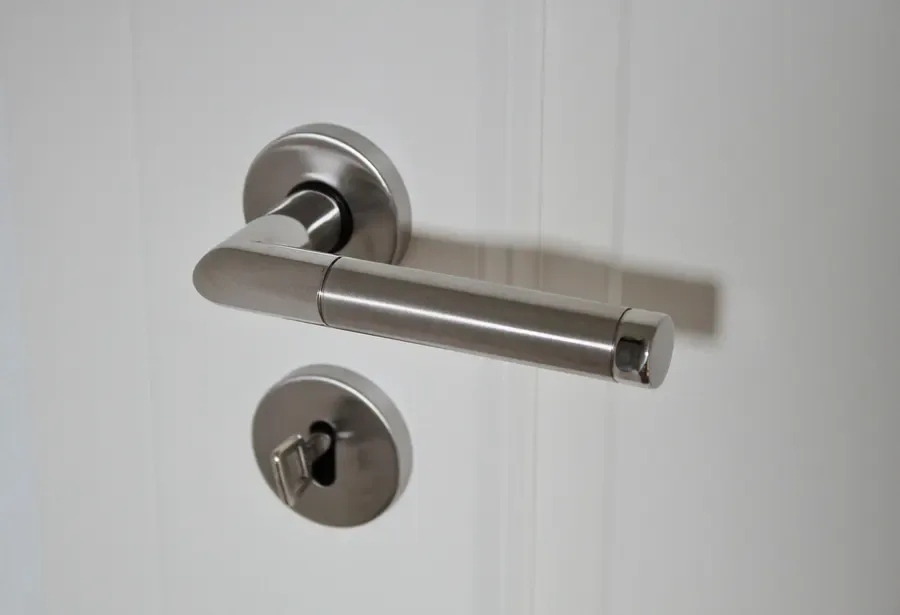
Common versions include:
- Single cylinders, operated by a key from one side
- Double cylinders, operated by a key from both sides
- Thumbturn cylinders, operated by a key outside and a turn knob inside
The cylinder passes through the door and gearbox and is usually held in place by a retaining screw in the door edge. Its length must suit the thickness of the door and handles. A cylinder that projects too far beyond the external handle may be more exposed to physical attack.
Security features vary considerably between products. If security is the reason for replacement, look beyond the cylinder’s shape and check its tested standard and resistance to snapping, drilling, picking and other attack methods. Our guide to anti-snap locks and euro-cylinder security explains these features in more detail.
Rim Cylinders
A rim cylinder is normally fitted through the face of a timber door and connected to a nightlatch mounted on the inside. From outside, it usually appears as a small round key cylinder. A metal tailpiece on the back transfers the movement of the key to the nightlatch.
The rim cylinder and nightlatch are separate components. A locksmith may therefore be able to change the cylinder and keys without replacing the complete internal nightlatch, provided the remaining mechanism is compatible and in reliable condition.
A round keyhole on the outside does not confirm the exact nightlatch model. Check the internal lock body for a brand name or model marking where it is safe to do so.
Oval Cylinders
An oval cylinder performs a similar function to a euro cylinder but has a rounded oval profile. It is less common in newer domestic installations, although it can still be found on some existing doors and older locking systems.
Euro and oval cylinders are not interchangeable simply because their lengths appear similar. The opening in the door furniture and the surrounding lock case must be designed for the correct cylinder profile.
Before ordering a replacement, confirm the cylinder shape, overall length, fixing position and whether it is operated by a key or thumbturn on each side. The connected lock mechanism should also be checked if the original symptom involves stiffness, unreliable locking or handle movement.
Identifying the cylinder is useful, but it does not diagnose the whole door. If a new cylinder does not address the actual fault, the gearbox, lock case, handles, spindle, alignment or frame keeps may still require attention.
Locksmith Help in Birmingham
Not Sure Which Lock Is Fitted to Your Door?
Call with your postcode and describe the handles, keyhole and door edge. We can help identify the lock and what needs to be inspected.
How to Read Door-Lock Markings and Product Names
A door-lock description often combines several details, including the mechanism type, number of levers, case size, finish and security standard. Each part describes something different, so recognising one term does not confirm the complete lock specification.
For example, a product described as a “five-lever mortice sashlock” is a lock fitted within the door that uses five levers and includes both a latch and a deadbolt. It does not automatically mean the lock meets a recognised British security standard.
Understanding a Lock Description
Common terms in a lock name may tell you:
- Mortice: The lock case is recessed into the edge of the door.
- Rim: The main lock body is mounted on the surface of the door.
- Deadlock: The lock has a bolt but no spring-operated latch.
- Sashlock: The lock combines a deadbolt with a latch operated by door handles.
- Nightlatch: A surface-mounted lock that normally latches when the door closes.
- Cylinder: The key-operated component that activates the surrounding mechanism.
- Multipoint: A connected mechanism with locking points positioned along the door edge.
- Case size: The overall depth of a mortice lock case, often given in millimetres or inches.
- Backset: The distance from the edge of the lock faceplate to the centre of the keyhole, cylinder or handle spindle.
- Finish: The visible colour or surface treatment, such as brass, chrome or satin nickel.
These terms help narrow down the lock family and dimensions. They do not confirm that a new part will fit, because the position of the keyhole, spindle, faceplate and fixing points may also differ.
What Do Three-Lever and Five-Lever Mean?
In a lever-operated mortice lock, the key lifts a set of internal levers to specific heights before the bolt can move. A three-lever lock contains three of these levers, while a five-lever lock contains five.
The lever count helps describe the internal mechanism, but it does not provide a complete security assessment. Locks with the same number of levers can differ in materials, construction, bolt design, resistance to attack and tested performance.
Three-lever mortice locks are often found on internal doors or applications where a higher-security entrance lock is not required. Five-lever locks are commonly used on external timber doors, but the number of levers alone should not be used to confirm whether a particular lock is suitable for an entrance door or an insurer’s requirements.
Does Five Lever Mean BS 3621?
No. A five-lever lock does not automatically comply with BS 3621.
BS 3621 is a performance standard for thief-resistant, mechanically operated single-point lock assemblies that require a key for locking and unlocking from both sides. Compliance relates to the tested lock assembly, not simply the number of levers inside it. The current standard is BS 3621:2017+A1:2024.
A compliant lock will normally carry a reference to BS 3621 on the product or its packaging, often alongside a certification mark. Older locks may display an earlier edition of the standard, so the full marking matters.
Do not assume that a lock complies because it has five levers, a long bolt or a familiar brand name. Check the visible marking and the exact product model. If the lock can be opened from inside without a key, a different standard may apply because BS 3621 specifically covers key-operated egress.
Where Can You Find the Lock Brand or Model?
The most useful identifying marks are usually found on the parts of the lock that are visible while the door is open. A brand name can narrow the search, but the exact model may require a code, measurements and photographs of the complete mechanism.
Check the following places without dismantling the lock:
- The door-edge faceplate: Mortice and multipoint locks may have a manufacturer’s name, logo, series name or code stamped into the metal strip.
- The internal lock body: A nightlatch or surface-mounted rim lock may display its brand or model on the inside casing.
- The cylinder face: Euro, oval and rim cylinders may carry a logo or security marking near the keyway.
- The handles or escutcheon: Door furniture can carry a manufacturer’s mark, although it may not be made by the same company as the lock.
- The key head: A brand or code may help identify the key system, but it does not always identify the complete lock.
- The keep or strike plate: Some frame components have stamped references, although these may refer only to that particular part.
- Existing paperwork or packaging: Installation records, receipts and spare-part packaging may contain a full product reference.
On a multipoint door, the cylinder, handles and locking mechanism can come from different manufacturers. A brand printed on the cylinder therefore does not necessarily identify the gearbox or locking strip. Similarly, handles carrying one manufacturer’s name may have been fitted over another company’s lock.
Photographs are often more useful than a brand name alone. Take clear images of:
- The outside and inside handles
- The cylinder or keyhole
- The full metal strip along the open door edge
- Every visible hook, roller and bolt
- Any stamped names, logos or numbers
- The keeps fitted to the frame
Do not remove a mortice lock case, gearbox or multipoint strip simply to look for a hidden model number. Removing the wrong screws or operating an unsupported mechanism can leave the door difficult to close or secure.
Even when a code is visible, confirm the lock type and relevant measurements before ordering a replacement. Manufacturers may use similar-looking components across several product ranges, and older mechanisms may have been discontinued or replaced by compatible alternatives. If the markings are unclear, the photographs and door details can help a locksmith identify what needs to be inspected.
Other Door Locks You May Find Around a Property
Not every door uses a mortice lock, nightlatch or standard multipoint system. Some properties also have smart locks, mechanical digital locks or specialised patio-door mechanisms. These locks can often be identified by their controls and position, but the visible parts may not reveal the complete system behind them.
Smart and Electronic Locks
A smart or electronic lock uses an electronic method to control access. Depending on the model, the door may be unlocked with:
- A mobile app
- A PIN code
- A key fob or access card
- A fingerprint
- A connected smart-home system
- A conventional key used as a backup
Some smart locks replace the complete locking mechanism, while others are fitted over or connected to an existing cylinder, deadbolt or multipoint lock. This distinction matters because the electronic unit and the mechanical lock can develop separate faults.
For example, a keypad or app may stop responding even though the mechanical lock still works. In another case, the electronics may operate correctly but be unable to move a stiff or poorly aligned mechanism.
Before identifying a smart lock, record the brand, model number, power source and any warning shown by its app or keypad. Check whether the problem affects electronic access, the physical key or both. Do not repeatedly operate the motor if the lock or door requires force.
Mechanical Digital Locks
A mechanical digital lock uses a push-button code without batteries, wiring or an app. These locks are commonly found on offices, storage rooms, shared areas and some residential side entrances.
Most have a numbered keypad on the outside and a knob, lever or thumbturn on the inside. Entering the correct code releases the handle so it can operate the latch or lock case.
The keypad is not always the complete lock. It may be connected to a separate tubular latch, mortice latch or lock case inside the door. When identifying the system, photograph both sides of the door, the faceplate on the door edge and any markings on the keypad body.
If the correct code no longer releases the door, the fault may involve the keypad mechanism, spindle, latch, internal lock case or door alignment. Do not assume the keypad needs replacing until the connected hardware has also been checked.
Sliding Patio-Door Locks
Sliding patio doors use different locking arrangements from hinged entrance doors. The lock may be built into the handle assembly or connected to a mechanism inside the vertical edge of the sliding panel.
Depending on the door design, the mechanism may use:
- A single hook or bolt
- Multiple hooks or locking points
- A key-operated cylinder
- A separate handle and thumbturn
- An anti-lift device
- Keeps fitted to the meeting frame or fixed panel
To identify a patio-door lock, check the handle shape, fixing positions, cylinder profile and the faceplate along the open edge of the sliding panel. Record any stamped name or number and photograph the hooks or bolts.
Do not remove the handle or mechanism while the door is closed. If the hook remains engaged or the door will not slide, forcing it can damage the lock, frame, glazing or rollers. The movement of the door itself should also be checked because worn rollers or poor alignment can make a working lock feel faulty.
Identifying the Lock Is Only the First Step
Knowing whether you have a mortice lock, nightlatch, cylinder or multipoint mechanism helps narrow down the problem, but it does not confirm which part is faulty or what should replace it.
Locks that look similar can differ in dimensions, operation, security specification and compatibility. Before ordering a part or agreeing to replacement, four separate questions need answering:
- What type of lock or component is fitted?
Identify the general lock family, visible markings and how the mechanism operates. - What is causing the problem?
A stiff key, loose handle or lock that will not engage may be caused by the cylinder, lock case, gearbox, spindle, door alignment or another component. - Can the faulty part be repaired or replaced separately?
A complete system may not need replacing when the fault is limited to one compatible component or a door adjustment. - Will the proposed solution remain suitable for the door?
The replacement must fit correctly, operate reliably and provide an appropriate level of security for that entrance.
Identification Does Not Confirm Compatibility
A description such as “euro cylinder” or “five-lever sashlock” is too broad for choosing an exact replacement. The correct part may depend on measurements, handing, faceplate shape, fixing positions, case dimensions and the design of the connected hardware.
Multipoint locks require particular care because similar faceplates can conceal different gearboxes and locking-point layouts. A replacement gearbox may share the same basic dimensions but use different connections or operating movements.
The same principle applies to mortice locks. Two cases may fit similar openings while placing the keyhole, spindle or bolt in a different position. Altering the door to accommodate the wrong lock can weaken the installation or leave existing handles and keeps misaligned.
Identification Does Not Diagnose the Fault
The visible lock type tells you what is fitted, not why it has stopped working. A euro cylinder may be easy to recognise, but the cylinder may not be responsible for a handle that will not lift or hooks that fail to engage.
A useful first check is to compare the lock’s operation with the door open and closed, provided the door is already open and the mechanism moves without force. If it works normally when open but becomes stiff when closed, alignment and frame interaction should be investigated. If the fault remains with the door open, the lock or its associated hardware may need closer inspection.
Our guide to lock repair or replacement explains how the fault, condition of the remaining mechanism and availability of compatible parts affect that decision.
Identification Does Not Confirm the Security Standard
A familiar brand, five-lever description or anti-snap label should not be treated as proof of a particular security standard. Certification applies to a specific product or lock assembly, not every item produced under the same brand.
Check the complete standard reference and exact model where security compliance matters. The type of door, method of exit, surrounding hardware and quality of installation can also affect whether the complete arrangement is suitable.
If a lock is being changed after lost keys, a move into a new property or an attempted break-in, compatibility is only part of the decision. Key control, physical damage and the security of the complete entrance should also be considered.
When the correct part or cause of failure is uncertain, arrange an inspection before buying a replacement. A clear diagnosis can prevent an unnecessary full lock change and reduce the risk of fitting a component that does not solve the original problem.
What Information to Provide When Asking for Help
You do not need to know the exact lock model before contacting a locksmith. Clear details about the door, the visible mechanism and the problem are usually more useful than guessing the lock name.
When asking for help, provide:
- The door material: State whether the door is timber, uPVC, composite, aluminium or another material.
- The door’s current position: Explain whether it is open, closed or locked shut.
- The visible lock type: Mention whether you can see a mortice keyhole, nightlatch, euro cylinder or long multipoint strip.
- How the lock operates: Explain whether you lift a handle, turn a key, enter a code or use an electronic control.
- The exact symptom: Describe what happens when you use the key or handle, including any stiffness, looseness or unusual movement.
- Whether the fault changes: Say whether the problem happens with the door open, closed or in both positions.
- Visible markings: Record any brand names, logos, numbers or standard references.
- The security situation: Make clear if the entrance cannot currently be locked or secured.
- Your location: Provide your Birmingham postcode when requesting attendance.
Avoid describing every fault as a “broken lock.” Saying that the key turns but the bolt does not move, or that the handle lifts when the door is open but not when it is closed, gives a much clearer starting point.
Which Photographs Are Most Useful?
Clear photographs may help identify the lock family and determine what needs to be inspected. Where the door can be opened safely, take pictures of:
- The complete door from inside
- The external and internal handles
- The cylinder or keyhole
- The full faceplate along the door edge
- The latch, bolt, hooks, rollers or other locking points
- Any names, logos, codes or security markings
- The corresponding keeps fitted to the frame
Include one wider photograph to show where each part sits, followed by close-ups of any markings. A close-up without context can make it difficult to tell whether the photographed part belongs to the cylinder, handle or complete mechanism.
Do not close an open door merely to reproduce the fault, especially if you are unsure whether it will reopen. Do not dismantle the lock or remove the multipoint strip to search for hidden markings.
If the door is locked shut, the key has snapped or the property cannot be secured, explain this when you contact our Birmingham locksmith team. The immediate problem may need addressing before the exact model can be identified.
Identify the Lock Before Choosing Parts
The safest way to identify a door lock is to examine the door material, the position of the mechanism, the visible locking points and any markings on the faceplate or lock body. These details can usually confirm the general lock type, but exact compatibility may still depend on measurements and the surrounding hardware.
Avoid ordering a replacement from the keyhole or brand name alone. A similar-looking cylinder, mortice case or multipoint gearbox may differ in size, operation or fixing position. Identification also does not confirm the cause of a fault, so check whether the problem involves the lock, handles, door alignment or frame before deciding what to replace.
If the model or fault remains unclear, you can call us to discuss the lock details. Explain what happens when you use the key or handle so we can help determine whether inspection, adjustment, repair or replacement is the appropriate next step.
Need a Locksmith in Birmingham?
Get the Right Lock Identified Before You Buy Parts
Call with your postcode, the door material and a description of what the key or handle is doing. We will help you work out whether inspection, adjustment, repair or replacement is needed.
Frequently Asked Questions About Door-Lock Types
How can I tell what type of door lock I have?
Start with the door material, then check whether the lock sits inside the door edge or on its surface. The keyhole, handles, faceplate and number of locking points can help distinguish between a mortice lock, nightlatch, cylinder and multipoint mechanism.
What type of lock is usually fitted to a uPVC door?
Most modern uPVC entrance doors use a multipoint locking mechanism operated by a euro cylinder and handles. However, the cylinder is only one component, and the gearbox, locking strip, hooks and keeps make up the wider system.
How do I know if I have a mortice lock or a nightlatch?
A mortice lock is recessed into the door edge, while a nightlatch has a visible lock body mounted on the inside face of the door. A timber entrance door may have both, so finding one does not mean another lock is not also fitted.
Is a euro cylinder the same as a multipoint lock?
No, a euro cylinder is the key-operated component, while the multipoint lock is the mechanism running along the door edge. Replacing the cylinder changes that component but does not replace the gearbox, locking strip, handles or locking points.
Can I replace the cylinder without replacing the complete door lock?
Yes, a cylinder can often be replaced separately when the surrounding mechanism is compatible and working correctly. A cylinder change will not solve faults caused by a damaged gearbox, worn handles or poor door alignment.
Can I identify a door lock from the key alone?
Usually not. A key shape or brand may suggest a particular cylinder or mechanism, but it rarely confirms the complete lock model, dimensions or security standard. Photographs of the door edge and visible markings provide better identification clues.
What if there is no brand name visible on the lock?
The lock may still be identifiable from its shape, dimensions, operation and locking-point layout. Photograph the handles, keyhole, door edge and frame keeps, and record any numbers or symbols even if they do not appear to be a brand name.
Does a five-lever lock automatically meet BS 3621?
No, five lever describes the internal mechanism and does not prove compliance with BS 3621. Look for the full standard reference and relevant certification marking on the exact lock or its original documentation.
How can I tell whether my door has a deadlock or a sashlock?
A deadlock has a key-operated bolt but no latch operated by handles. A sashlock combines a deadbolt with a spring latch, so the door normally has handles as well as a keyhole.
Why does my lock work when the door is open but not when it is closed?
This often suggests that the latch, bolt or multipoint locking points are not meeting the frame keeps correctly. Door movement, worn hinges or poor alignment should be checked before assuming that the lock itself needs replacing.
Can a locksmith identify my lock from photographs?
Photographs can often identify the general lock type and may narrow down the manufacturer or model. Exact compatibility may still require measurements or an inspection, particularly for mortice cases and multipoint gearboxes.
What should I do if the door is locked and I cannot identify the lock?
Do not drill, prise or repeatedly force the key or handle. If you are authorised to enter the property, arrange help with a locked door so the lock can be assessed without avoidable damage.
24-Hour Locksmith Help
Need a Locksmith in Birmingham?
Locked out, dealing with a broken lock or a door that will not secure? Call with your postcode to discuss the problem and current availability.
24-hour emergency line
Speak to a Birmingham locksmith now
0121 400 0413When you call, tell us:
- Your postcode for a current arrival estimate
- What has happened locked out, key snapped or lock failed
- Your door or lock type if you know it
- DBS-checked technicians
- Non-destructive entry attempted first
- Available 24 hours a day
From Our Blog
Our Recent Blogs